

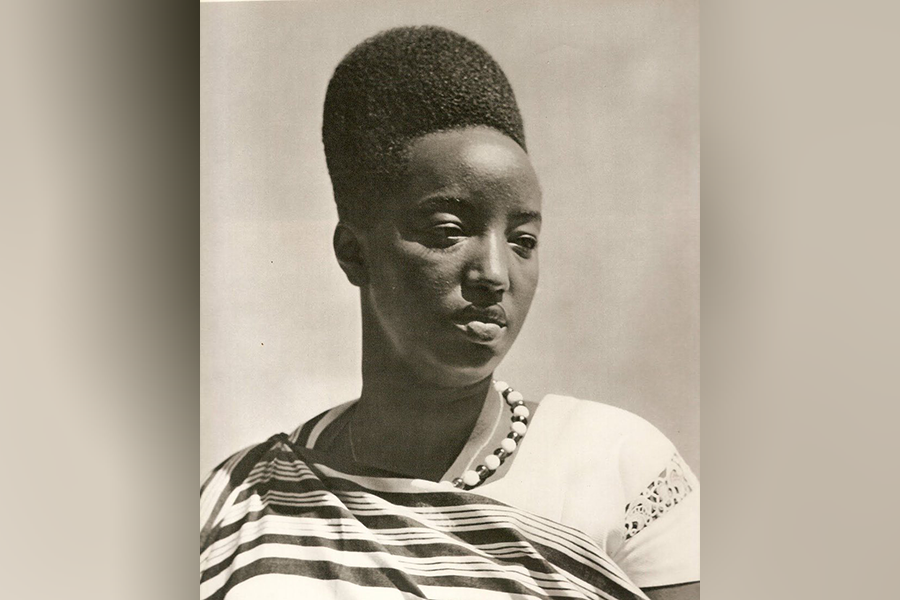
Rosalie Gicanda—graceful, humble, and deeply revered—remains one of the most poignant symbols of loss as Rwanda marks 32 years since the 1994 Genocide against the Tutsi.
The last Queen of Rwanda, born in 1928, lived a quiet and modest life in Butare after the abolition of the monarchy in the early 1960s.
Stripped of royal privilege following political upheavals that ended centuries of monarchical rule, she became known not for political influence, but for her dignity, simplicity, and generosity.
Locals often recall her sharing milk with children in Taba, Butare—an act that made her beloved within her community.
Her killing on April 20, 1994, during the early stages of the ethnic cleansing, remains one of the most symbolic moments of that national tragedy.
At around 11:30am that deathly cold morning, armed men stormed her residence in Butare, abducting her alongside several others. Witnesses and historical accounts indicate that in her final moments, she pleaded not to be killed with machetes or knives.
Her request was granted, and she was shot multiple times on the chest.
Gicanda's death marked a turning point in Butare, a region that had initially shown resistance to the unfolding violence. It signaled the escalation of killings in southern Rwanda, where thousands of Tutsi were murdered in the days that followed.
Understanding Gicanda’s death also requires revisiting the monarchy she symbolised.
Rwanda’s Monarchy
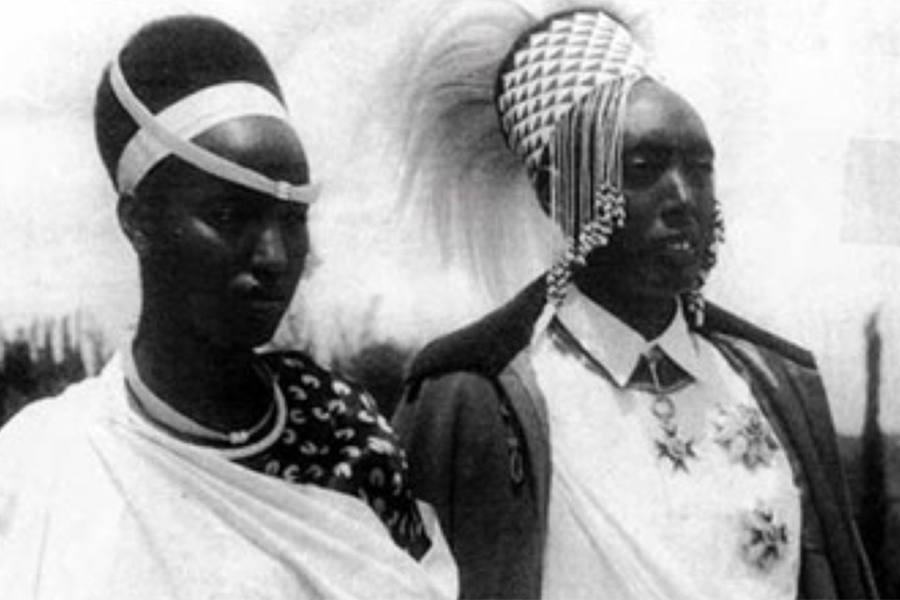
Before colonial restructuring, Rwanda was ruled for centuries by a centralized monarchy led by the Mwami (king), supported by a structured court system and traditional governance institutions.
The most widely documented early monarch is King Ruganzu II Ndoli (16th century), remembered in Rwandan oral history for consolidating the kingdom and restoring stability after exile.
Later kings such as Kigeli IV Rwabugiri (reigned 1853–1895) expanded the kingdom significantly through military campaigns and administrative reforms that strengthened central authority.
The monarchy operated within a complex social system that predated colonial rule, though it later became entangled with colonial classifications imposed first by Germany and then Belgium.
These colonial administrations reinforced ethnic divisions that would later have devastating consequences.
The last reigning monarch was King Mutara III Rudahigwa, who ruled from 1931 until his sudden death in 1959 under disputed circumstances.
His reign coincided with growing political tensions and the rise of anti-monarchical movements.
He was succeeded briefly by King Kigeli V Ndahindurwa, who ascended the throne in 1959 but was forced into exile in 1961 following the abolition of the monarchy during the “Social Revolution” supported by Belgian colonial authorities.
Rwanda then became a republic in 1962.
Rosalie Gicanda, who had been queen consort to Mutara III, remained in Rwanda after the monarchy’s collapse, living quietly in Butare until her assassination in 1994.
The Genocide Context
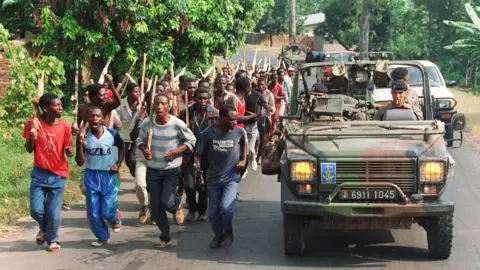
The 1994 Genocide against the Tutsi began on April 7 after the assassination of President Juvénal Habyarimana, whose plane was shot down in Kigali.
What followed was a coordinated, state-led campaign of mass killings targeting Tutsi - who the genocidal maniacs called inyenzi (cockroaches) that had to be crushed dead - and moderate Hutu.
More than a million people were slaughtered in a space of 100 days, with decoumented records showing that toddlers would be dumped into pit-latrines alive or their heads would be smashed against rocks.
Humanity had died, death was the currency that stocked Rwanda.
Historical records and international tribunals have established that the genocide was planned and executed by elements of the then-government, military structures, and extremist militias, with killings spreading rapidly across the country.
In the southern region, particularly Butare, initial resistance to the killings delayed large-scale violence. However, by mid-April 1994, that resistance was broken, and massacres intensified dramatically.
According to Rwanda’s Minister of National Unity and Civic Engagement, Dr Jean-Damascène Bizimana, more than 250,000 Tutsi were killed on April 21 alone across multiple locations including Butare, Kinazi, Cyanika, Murambi, and Kaduha.
He has previously described the genocide as a “state crime” orchestrated by the extremist regime of the time, later prosecuted in part by the International Criminal Tribunal for Rwanda (ICTR) and national courts.
The genocide, which lasted approximately 100 days, claimed more than 800,000 lives, predominantly Tutsi, before being halted by the Rwandan Patriotic Front (RPF).

Rwanda today commemorates Rosalie Gicanda under its Kwibuka 32 rememberance banner not only as a royal figure but also as a symbol of dignity and vulnerability during national collapse.
April 20 is observed as a day of remembrance for her and for the particularly intense killings that occurred in Butare during that period.
Foreign Affairs Minister Olivier Nduhungirehe described her as “beautiful, gracious, and majestic,” noting her enduring legacy in Rwandan memory.
“She was a queen… known for regularly sharing milk with children in her neighbourhood,” he said, reflecting on her quiet life after royalty.
As Rwanda continues Kwibuka 32 under the national theme of “Never Again,” the memory of Rosalie Gicanda stands alongside broader national reflection—linking the legacy of the monarchy, the tragedy of genocide, and the ongoing pursuit of unity and reconciliation.
